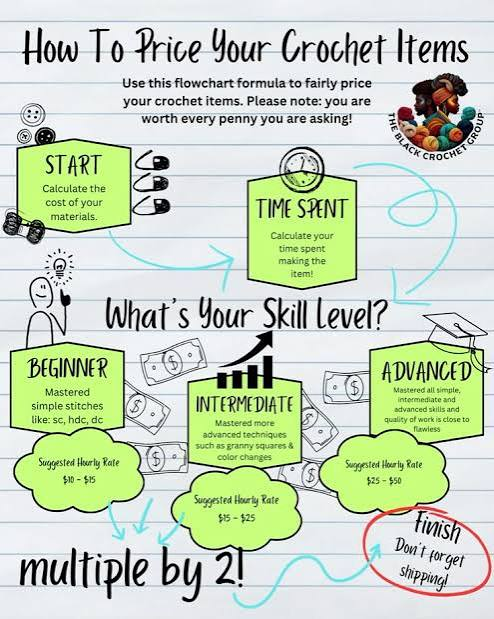
Have you ever spent hours crocheting a beautiful bag, plushie, or flower bouquet, only to wonder how much you should charge for it? Pricing handmade crochet items can feel difficult, especially when you worry that customers might think your prices are too high.
The truth is that crochet takes time, creativity, skill, and materials. Your prices should reflect all of these things, not just the cost of yarn.
Whether you sell crochet items online, at craft fairs, or to friends and family, this guide will help you calculate your costs, value your time, and set prices that make sense for your handmade business.
1. Calculate the Cost of Your Materials
The first step in learning how to price crochet items is calculating how much you spend on materials. Yarn is usually the biggest expense, but it is not the only one.
Remember to include:
- Yarn used for the project
- Crochet hooks or other tools when allocating their cost to your work
- Safety eyes, buttons, beads, or other embellishments
- Stuffing and lining materials
- Labels, tags, and packaging
- Other supplies used to finish the item
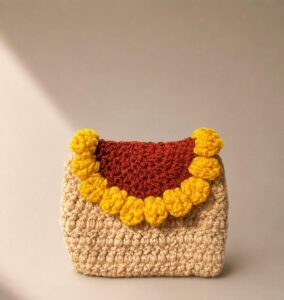
For example, imagine you are making a crochet bag.
| Material | Cost |
|---|---|
| Yarn | $5.00 |
| Button and lining | $2.00 |
| Label and packaging | $1.00 |
| Total material cost | $8.00 |
Your material cost is $8.00. However, selling the bag for $8.00 would mean you earn nothing for your labor, and you have not covered other business expenses.
Tip: If you purchase a large ball of yarn, calculate the cost of the amount you actually use rather than charging the entire ball to one project.
2. Pay Yourself for Your Time
One of the biggest mistakes crochet sellers make is forgetting to pay themselves.
Crochet is handmade work. Even a small item can require considerable time to stitch, assemble, and finish. Your time has value, so include labor in your price.
Use this simple formula:
Labor cost = Hours worked × Hourly rate
Suppose your crochet bag takes four hours to complete and you decide to pay yourself $5 per hour.
4 hours × $5 = $20 in labor.
Add this to the $8 material cost, and your subtotal becomes $28.
Your hourly rate should reflect your experience, the complexity of your work, and what is realistic for your market. The example uses illustrative figures, not a universal recommended wage.
Also, track the time spent weaving in ends, sewing pieces together, attaching handles, and finishing the item. These tasks are part of the work, too.
3. Include Your Business Expenses
Materials and labor are essential, but they are not the only costs involved in selling crochet items.
Depending on how you run your business, you may also pay for:
- Electricity and other workspace expenses
- Online marketplace or payment processing fees
- Shipping supplies
- Photography props and product labels
- Website hosting or advertising
- Equipment maintenance
You do not need to calculate every tiny expense separately for every item. You can estimate a reasonable overhead amount per product based on your total business expenses and sales.
For example, if you allocate $2 to the crochet bag for overhead, your costs now look like this:
- Materials: $8
- Labor: $20
- Overhead: $2
Total cost: $30
This is your estimated cost to make and prepare the bag for sale, before any additional selling fees or profit.
4. Add Profit to Your Crochet Price
Paying yourself for your labor is not the same as making a business profit.
Labor compensates you for the time you spend creating an item. Profit helps your business grow, replace tools, handle unexpected expenses, and fund future projects.
A simple starting formula is:
Selling price = Materials + Labor + Overhead + Profit
If your total costs are $30 and you add $6 in profit, your selling price becomes $36.
This is a straightforward cost-plus approach. For a more formal profit-margin target, you can calculate the price by dividing total costs by one minus your desired margin.
For example, a $30 total cost with a 20% profit margin gives a price of $37.50 before any additional selling fees.
Remember that your final price also needs to make sense for your customers and the market you serve.
5. Example: How Much Should You Charge for Crochet Items?
Let’s compare three handmade products using illustrative costs and prices.
| Crochet item | Total cost | Example selling price |
|---|---|---|
| Crochet flower | $3 | $5 |
| Crochet pouch | $12 | $18 |
| Crochet bag | $30 | $38 |
These figures are examples, not fixed market prices. Actual costs depend on your yarn, labor time, location, design, and selling expenses.
A crochet flower might be quick to make, while a detailed bag could require several hours of stitching and assembly. That is why pricing every product using the same markup can lead to undercharging.
Calculate each product individually, then compare your result with similar handmade items to understand whether your price is realistic.
6. Research Similar Crochet Products
Once you know your costs, research what other makers charge for comparable items.
Look at handmade marketplaces, independent crochet shops, craft fairs, and social media sellers. Compare products with similar features rather than choosing the cheapest item you can find.
Consider:
- Size and complexity
- Yarn quality
- Stitch detail and finishing
- Customization options
- Brand presentation
- Whether shipping is included
Avoid copying another seller’s price without understanding their costs. They may use different materials, work at a different pace, or have a different business strategy.
Your goal is to find a price that covers your costs, values your work, and fits your target customers.
7. What If Customers Say Your Crochet Is Too Expensive?
It can be discouraging when someone says your handmade work costs too much. However, not every customer is your ideal customer.
Handmade crochet is different from mass-produced merchandise. Each item requires materials, time, and individual attention.
Instead of immediately lowering your price, consider offering different options. You could create a smaller version, use a simpler design, or offer a budget-friendly product alongside your more detailed pieces.
You can also explain what makes your work special through clear product descriptions and photographs.
Never feel that you must ignore your labor costs simply to compete with factory-made products.
8. Common Crochet Pricing Mistakes to Avoid
When setting your prices, watch out for these common mistakes:
- Charging only for yarn: This ignores your time and business expenses.
- Forgetting finishing time: Sewing, weaving in ends, and packaging all take effort.
- Copying competitors blindly: Their costs and circumstances may be different.
- Offering discounts too frequently: Discounts should not make your products unprofitable.
- Ignoring selling fees: Marketplace and payment fees can reduce what you actually receive.
- Undervaluing your skills: Your experience, consistency, and attention to detail matter.
- Review your prices whenever material costs increase or you become more efficient at making a product.
- Final Thoughts: Your Crochet Work Deserves a Fair Price
- Learning how to price crochet items takes practice, but you do not need a complicated business plan to begin. Start by calculating your materials, paying yourself for your time, estimating overhead, and adding a reasonable profit.
- Then compare your prices with similar products and adjust them to suit your customers and business goals.
- Most importantly, remember that a handmade item represents more than yarn. It reflects your creativity, patience, and skill.
- Your goal is not simply to sell more crochet items. It is to build a business where your hard work is valued and your creativity can continue to grow.